Liberation Day Tariffs: One Year of Supply Chain Fallout
A year after Liberation Day tariffs hit, supply chains have shifted for good. 89,000 jobs lost, new supplier geographies, and new operational risk surfaces.
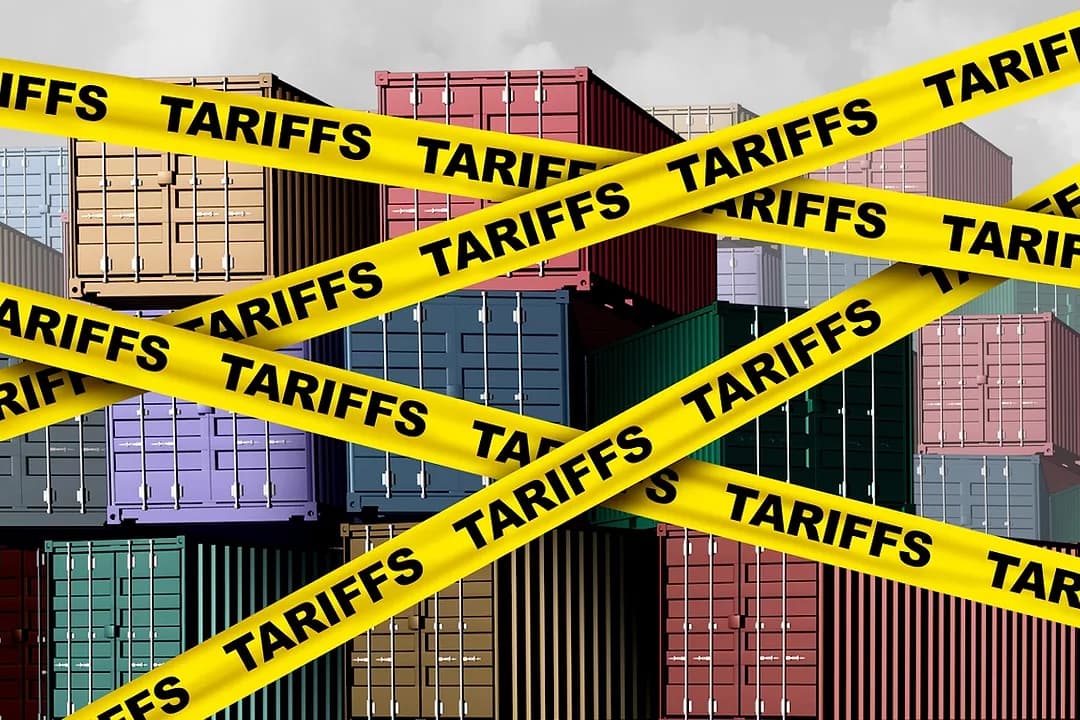
One Year, 89,000 Jobs, Zero Certainty
On April 2, 2025, the Trump administration announced sweeping tariffs on imported goods. The policy shock was immediate. Within weeks, CFO confidence in managing supply chain disruption collapsed from 40% to 5% (PYMNTS). One year later, the uncertainty hasn't gone away -- it's become the operating environment.
The U.S. manufacturing sector has shed 89,000 jobs since Liberation Day -- equivalent to roughly 2,800 average-size factory closures (Tax Foundation). Firms in high-uncertainty environments reported an average revenue decline of 6% over the past 12 months. And 88% of CFOs still expect ongoing supply chain disruptions through 2026.
What Changed
The tariffs peaked at 21% -- the highest in a century. The U.S. Supreme Court ruled in February 2026 that the emergency powers used to enact them were not legal (Axios). But by then, the restructuring was already underway.
- Vietnam surpassed China as the leading U.S. supplier of laptops and electronics. A Bloomberg analysis of shipment-level customs data confirmed the shift that started during Trump's first term has accelerated (Bloomberg).
- 93% of retail supply chain leaders now prioritize diversification within Asia to reduce tariff exposure (edhat).
- 75% of goods firms reported margin declines -- even after raising prices (PYMNTS).
- Core production hasn't actually left China. Chinese manufacturers moved low-skill finishing assembly to Vietnam where they face lower levies. The supply chain shifted geography, not origin.
What This Means for Operations Teams
If you run multi-site operations with cross-border suppliers, the tariff landscape has changed your risk surface. New supplier geographies mean new exposure: different regulatory regimes, different infrastructure reliability, different weather and political risk profiles.
Three things to do now:
Remap your supplier risk. Your procurement team may have shifted suppliers to Vietnam, Mexico, or India in the last 12 months. Your risk and continuity teams need to follow. Each new supplier geography carries its own disruption profile -- flooding in the Mekong Delta, cartel activity along Mexican logistics corridors, monsoon season in Tamil Nadu.
Stress-test your dual-source assumptions. Many companies added a second source in a new region to hedge tariff risk. But if both sources share a common upstream dependency -- the same port, the same raw material origin -- diversification on paper isn't diversification in practice.
Monitor policy, not just weather. Tariff policy is now a material operational risk. The Supreme Court decision, retaliatory measures from trading partners, and shifting trade alliances all affect lead times and costs. Orion tracks geopolitical and policy risk signals in real time, giving operations teams visibility into shifts before they hit the supply chain.
Wrapping Up
The tariff shock of April 2025 has become a permanent feature of global supply chains. Companies that adapted early -- remapping suppliers, stress-testing routes, monitoring policy risk -- are outperforming those that waited. The question isn't whether more disruption is coming. It's whether your team sees it first.
See how Orion monitors these risks in real time
Get adaptive risk alerts across 190 countries, updated continuously from 100,000+ data sources.
Request a Demo →Related
CISA to Infrastructure: Plan for Going Offline
CISA's CI Fortify initiative tells critical infrastructure operators to prepare for weeks of isolated operations during cyber conflict. Here's what it means.
ArticleHurricane Season 2026: Prepare Operations Before June 1
The 2026 hurricane season starts June 1 with 11-16 storms forecast. Below-average counts don't mean low risk. Here's how operations teams should prepare now.